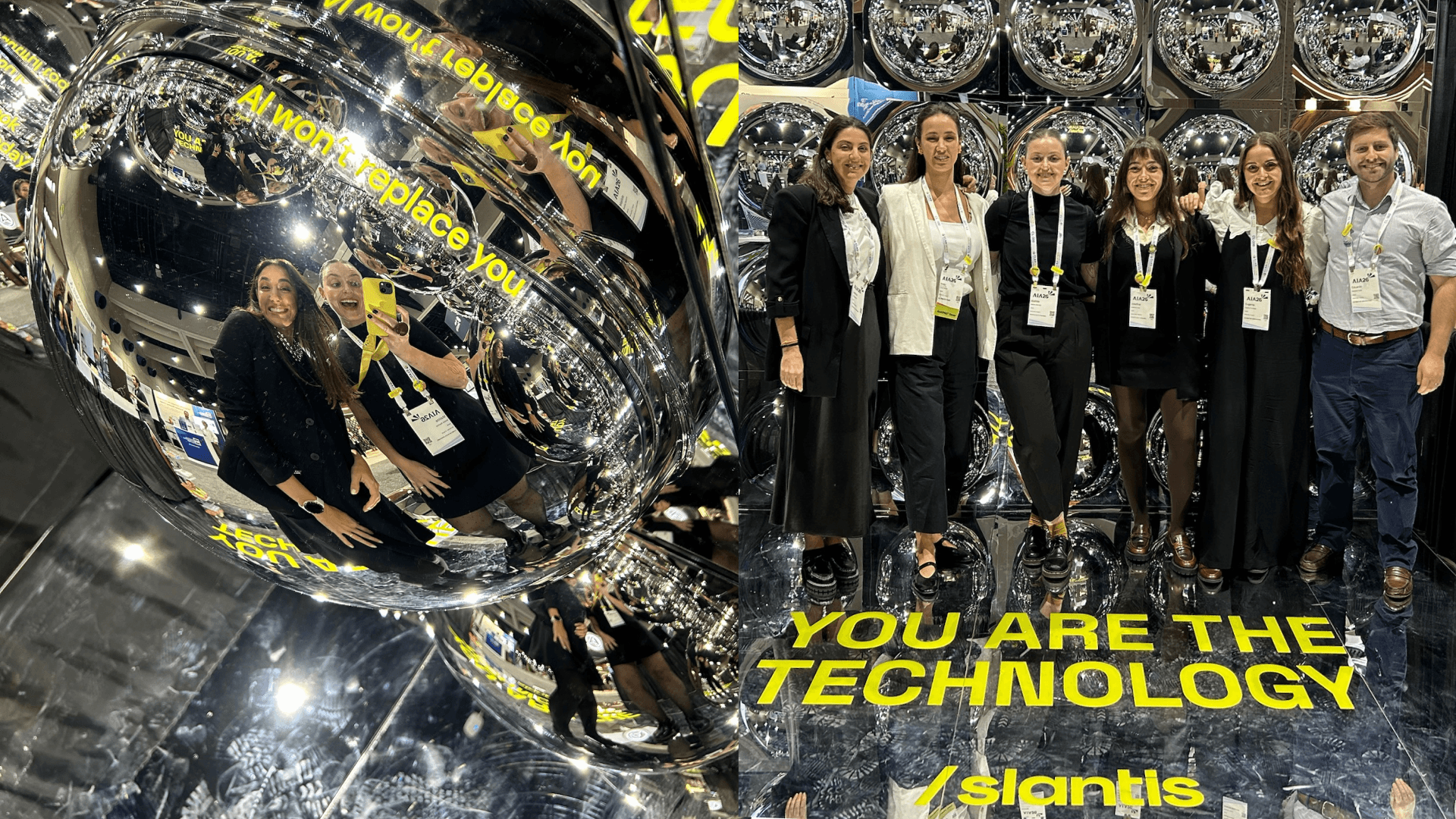
You Are the Technology
READING TIME
3:00
MIN
Technology

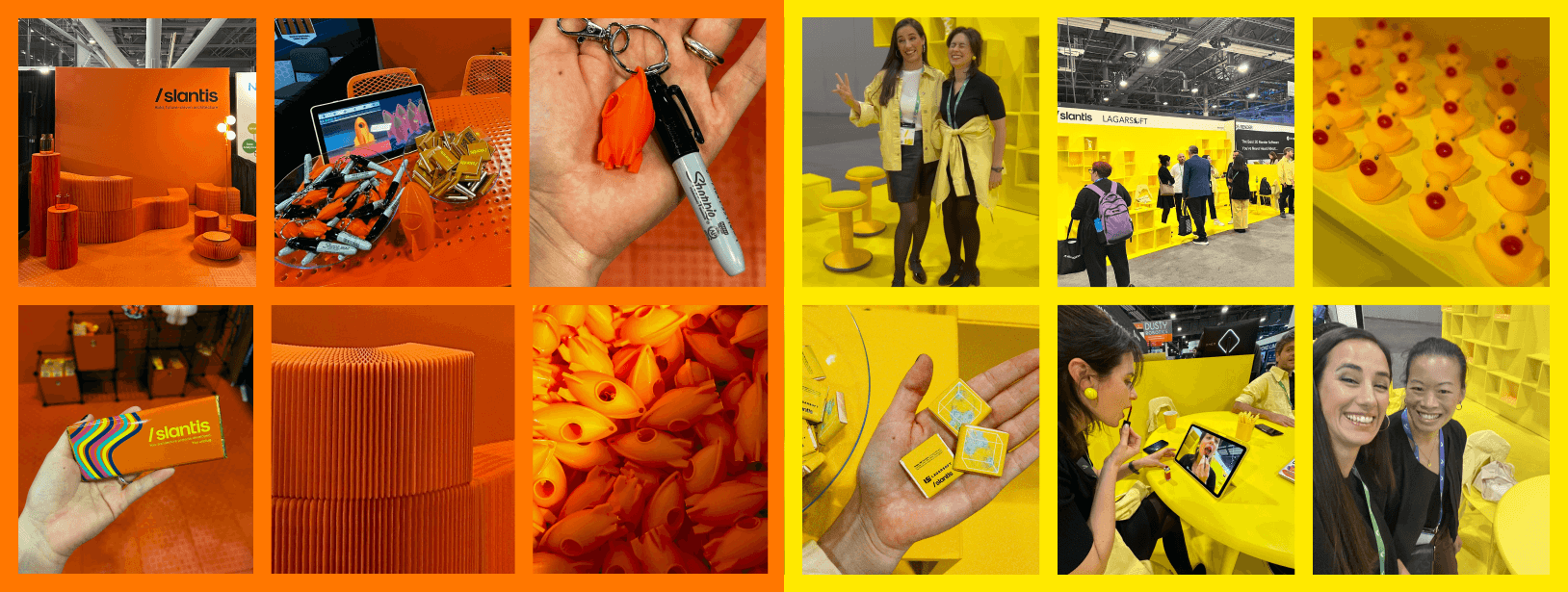
Our clients, community and friends look for the /slantis booth at conferences. We've spent a few years making it pretty unique, so people come over to see what it says. Usually they catch the bold monochrome booth from down the aisle and head in.
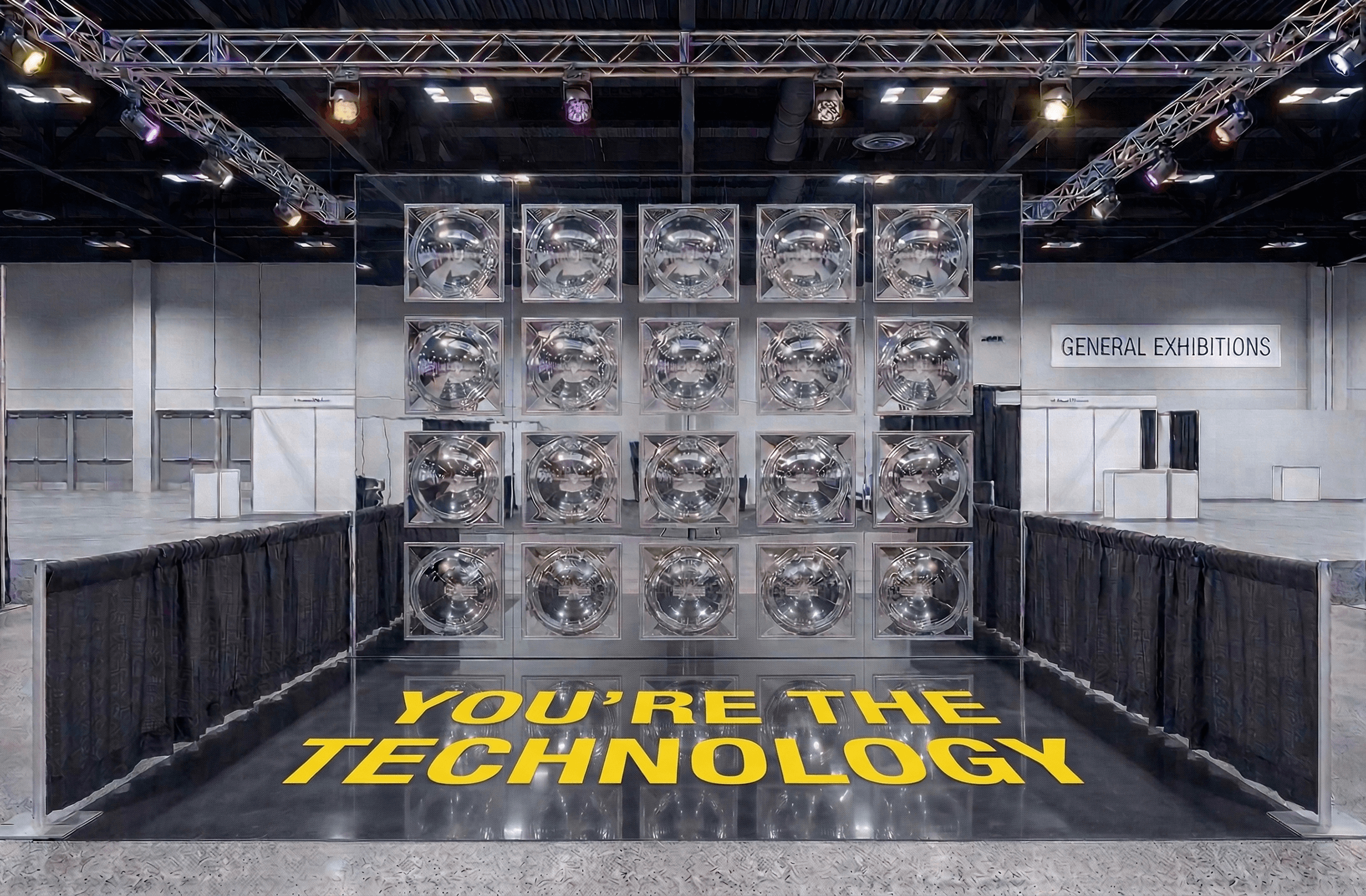
This year there was no orange, no yellow. Instead, they found a wall of mirrors.
At the back wall were twenty convex chrome domes over a mirrored floor. The only thing to look at was the room itself, bent and multiplied, with whoever stood there caught in the middle of it and four words across the floor: You are the technology.
Behind it was a question we wanted to address with real weight, and those four words were the answer. Here's what they were answering.
The question in the room
By lunchtime at most architecture conferences in 2026, the pitches start to rhyme. Everyone has a model that drafts faster than a junior architect, and everyone wants ninety seconds to demo it. But underneath the demos there's a worry nobody quite names out loud. The machine is gaining, and the quiet fear is that the architect is the next job on the list to automate.
Nobody says it that plainly, so it comes out sideways instead. "We're still figuring out where AI fits." "Juniors in my team are faster than me at this now." But the real question, the one sitting under the small talk, is harder. If a model can draft the set and clear the code check on its own, what is the part that still needs the architect?
How we got there (the short version)
We obsess over how /slantis shows up, so "rent a booth, hang a banner" was never going to fly.
To design the booth, we pulled a group from across the company and ran a brainstorming session backwards. Before anyone was allowed a good idea, everyone had to describe the worst booth they'd ever stood in. Then we went wide and threw everything at the board, and only let the constraints in afterward, mostly budget and building specs.
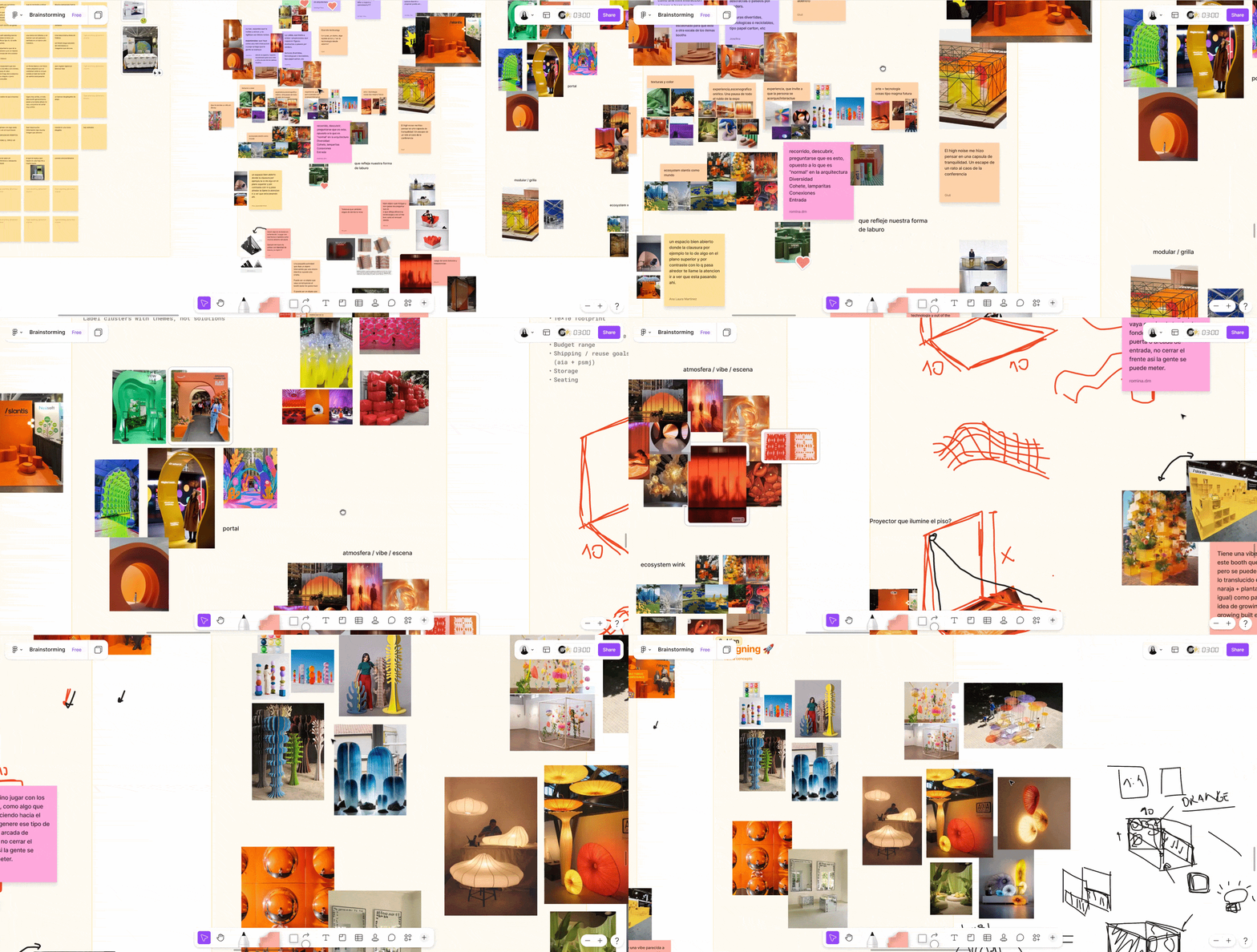
What survived was a video from an influencer's living room someone had saved months earlier: a wall of mirrors, the kind of object people reach toward before they've decided to. They bent the whole room into itself and handed it back bigger than it was. Twenty of them, so anyone stepping into the booth would find it already full. Full of themselves.
Why a mirror, of all things
Most booths answered the AI question by pointing at the machine. We wanted to point back at the person, and a curved mirror seemed one of the most direct ways we knew. People in front of it didn't shrink beside the tool. They came back bigger, and harder to ignore.
And the belief under that is older than anything being demoed forty feet away.
Yuval Noah Harari has an idea we kept circling. Humans don't run the planet because we build better tools. We run it because we can cooperate flexibly, in enormous numbers, around things that exist only because we all agree they do. Money is one of those things. So is a religion, or a border on a map. So is a set of construction documents.
The shared story is the original technology. It is the thing that lets thousands of strangers who will never meet turn a pile of agreements into a building.
That weighs differently in architecture than almost anywhere, because architecture is made of it. A drawing is a fiction a few hundred people agree to make real. A building is a belief that survived coordination. We have been working inside Harari's argument for years and quietly filing it under "project delivery."
So here is what the mirror was really for.
Most architects have tried the tools by now, and watched them turn out something genuinely usable. And the best call on the last project still came out of a conversation no model could have prompted. The client still signed because of the people across the table, not the thing the software generated.
AI will not replace that. Used well, it clears more room for it. The most powerful technology people ever built was the agreement to cooperate, and we have been carrying it the whole time.
You are the technology.