Ahead of the Code: How to Future-Proof your Architecture Practice
READING TIME
7:51
MIN
Architecture

Changes in the international building code (IBC) are inevitable, and are often announced months before enforcement and redundancy of previous rules. Yet despite this advance notice, many firms still scramble at the last minute — treating each update as a disruption instead of a strategic inflection point.
New materials are being tested every day, research continues to reshape layouts and systems, and accessibility standards keep evolving. Each update brings both new constraints and new opportunities for architects. How do we keep up with code changes from all levels of government, and ensure efficiency of work while also maintaining excellent design quality?
But most critically, can we move beyond reactionary strategy? Employing workflows that prioritize flexibility from day one ensure no surprises on the day of rule change. Proactive thinking, planning, and agile design processes ensure firms can seamlessly integrate updates into their work, rather than getting bogged down in confusion after the fact. Code shifts expose who is future-proofed, and who is not. The firms that win are the ones who prepare before the PDFs drop.
Impacts to Projects
Building code adoption is fragmented, and that fragmentation directly impacts coordination and timelines. While regional and local codes cascade from the IBC, they are adopted on different schedules across jurisdictions. For firms working across multiple cities or states, this poses a logistical headache of ongoing coordination and planning challenges.
Review by authorities having jurisdiction (AHJ), is a built-in part of every project timeline. Through planning and permit reviews, AHJs assess compliance with requirements such as egress, stair dimensions, corridor widths, and life-safety provisions. Teams that stay current and translate these requirements clearly into drawings typically receive fewer comments and move through review more smoothly. However, when recent updates are missed, the opposite happens: projects enter multiple rounds of review, adding rework, waiting time, and uncertainty to schedules that are already under pressure.
The challenge deepens because building codes operate as interconnected systems. A change in one requirement can activate others since the building code has many overlapping sections—often alongside local standards that sit outside the core building code, such as accessibility regulations, zoning constraints, special site conditions, or state amendments.
These shifts frequently trigger domino effects across disciplines. Revisions from architectural, structural, MEP, landscape, and fire-protection consultants must be tightly coordinated to maintain a cohesive set of documents. When these impacts aren’t anticipated early, what begins as a small code adjustment can quickly escalate into a broader redesign effort.
Turning Obstacles into Opportunities
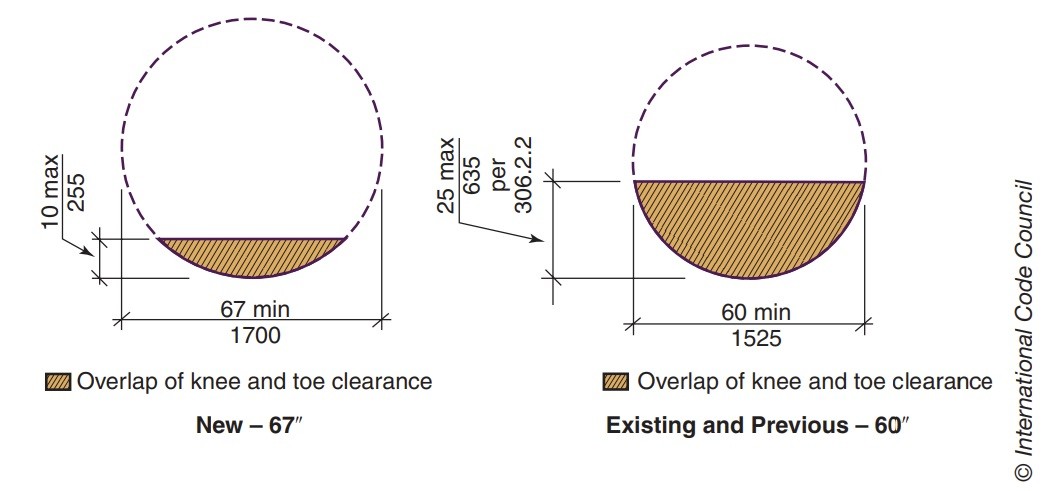
ANSI A117.1-2017 Turning Radius Courtesy of ICC
When accessibility clearances increased, forward-thinking firms didn't just grudgingly expand bathrooms: they repositioned themselves as universal design experts, turning compliance into a competitive advantage. The same pattern is emerging today around fire safety, structural systems, and embodied carbon — where compliance is quietly becoming a differentiator.
Teams that are able to pivot quickly, and set up their workflows for flexibility, avoid common issues that arise when a building code change looms on the horizon. Consider how software developers handle version updates: they build automated testing, maintain backwards compatibility, and plan for migration paths. Architecture firms need equivalent systems. Turning documentation into a living product gives teams the capability of responding in real time to change.
The Importance of Agility
In practice, agility means absorbing change without destabilizing a project. Certain areas of the building code are consistently subject to revision, and teams trained to recognize them can detect impacts early—before they surface in permit reviews. Instead of reacting to comments, agile teams anticipate compliance issues and adjust proactively.
A strong grasp of how codes activate across building types, heights, and occupancies allows teams to model flexible assumptions from the start. Design options can then pivot as thresholds are crossed—whether that means additional exits, reconfigured stairs, or revised plumbing requirements. At slantis, we call this code-aware design massing: developing early options that adapt as regulatory conditions shift.
Predictive modeling extends this approach. When code outcomes are uncertain, “if/then” scenarios help clients evaluate risk, scope, and timeline implications in advance, enabling teams to move quickly once requirements are finalized.
Building Responsive Teams & Systems
Building these systems doesn’t happen overnight. It takes a coordinated team effort to continually fine-tune the internal processes that lead to better quality design for clients.
Continuous learning benefits everyone: hosting lunch and learns, seminars, or inviting code experts to speak to teams ensures that regulatory issues remain top of mind and in the conversation. No one should be taken by surprise when an update appears on the horizon.
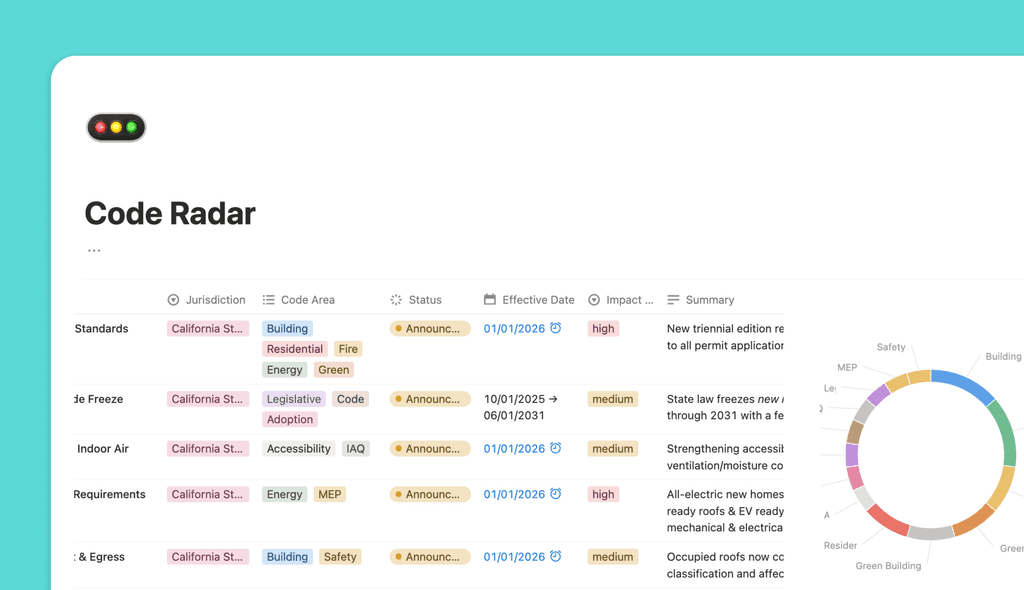
slantis code radar, our code-awareness dashboard
Maintaining code-awareness dashboards, and designating accountables for collating and distributing news and updates on local codes ensures that all teams are not only getting the newest information, but that everyone is receiving it together, avoiding mistranslations.
Implementing code-correct design at the start of the project avoids costly delays later on: for instance, we’ve all seen how large universal washrooms are, and the many components of barrier-free design required like grab bars, the call system, and extra-wide doors. Imagine having designed a washroom too small to accommodate the correct clearances, and only have this identified after submitting for building permit. Entire portions of the building would need to be reworked! This can be avoided if all members of a drafting team feel responsibility for implementing compliance checks in their work, regardless of seniority and without only relying on upper management as a safeguard.
The slantis approach
At slantis, responding to code change is not a one-off effort—it’s built into how we operate. We continually adapt and update our internal systems so regulatory updates are reflected cohesively and simultaneously across the platforms our teams rely on.
Everyone is code-savy
Learning is in our DNA, so building code literacy is not confined to a few specialists—it’s a shared skill across the entire team. Many of the most visited pages in our Project Development Wiki are code-related references and workflows, reflecting how embedded regulatory knowledge is in our daily practice.
We invest early in training junior architects, ensuring code awareness is built from the start of their careers rather than treated as a late-stage check. This approach has led to a 75% reduction in code-related errors in junior work. As a result, teams are able to anticipate likely scenarios, evaluate implications quickly, and present informed options to clients—aligning design intent, risk, and regulatory strategy from the outset.
Code literacy doesn’t replace oversight; it strengthens it. Proactive design reviews by senior team members act as a second layer of assurance throughout all design stages. Regular drawing reviews ensure that teams are consistently aligned on design strategy, interpretation, and compliance—catching issues early, before they become costly course corrections.
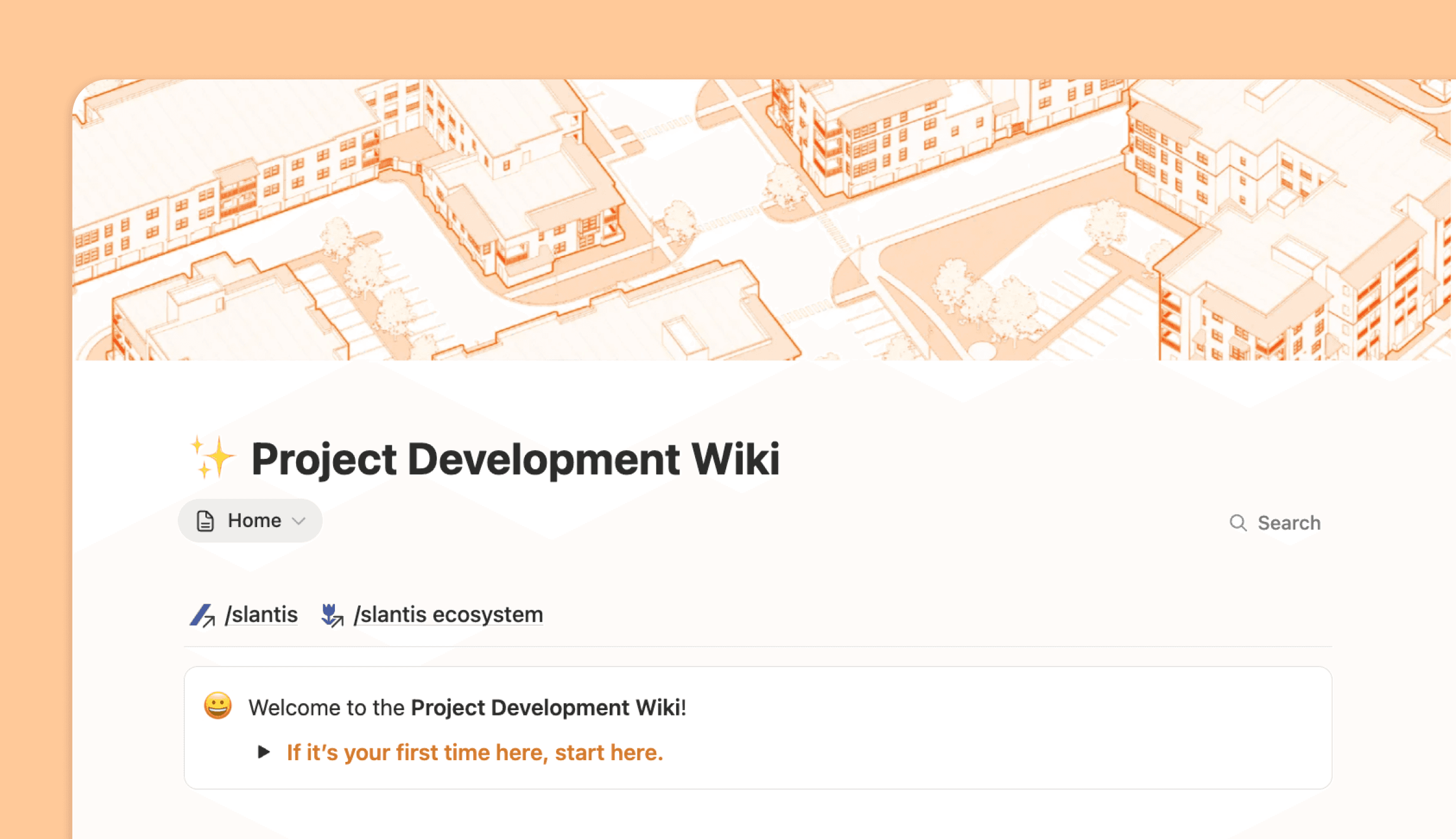
Project Development slantis Wiki
Systematizing Quality
Quality at slantis is designed into the workflow. Our QA/QC system replaces ad hoc reviews with a structured, searchable database that documents every code issue and resolution across all projects. Team members access digital checklists covering everything from occupancies to exit requirements, and can instantly reference how similar challenges were solved previously.
The system automatically flags when reviews are due, keeping teams accountable to deadlines and quality standards. It shifts QA/QC from reactive correction to cumulative learning. Instead of reinventing solutions on every project, teams build on shared institutional knowledge—getting faster, more precise, and more confident with each iteration.
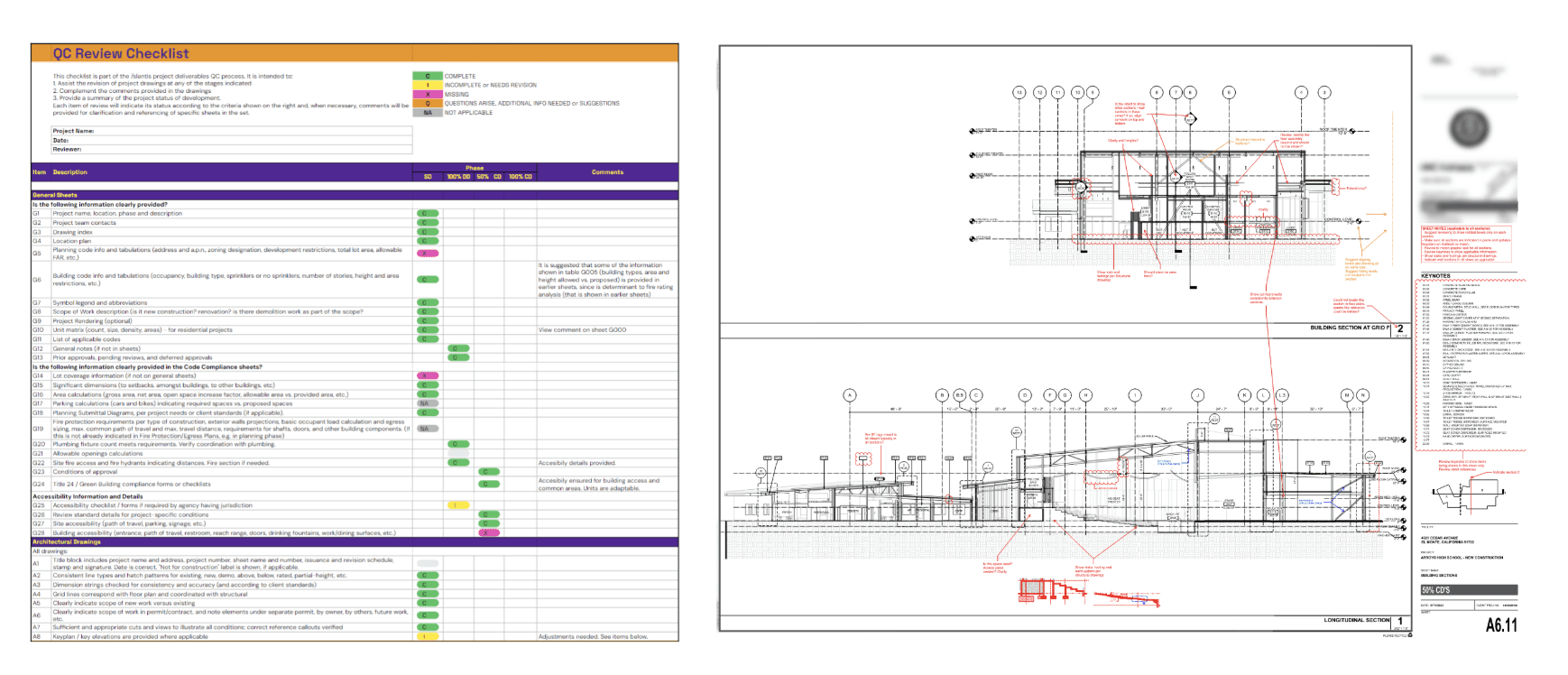
slantis QAQC sample
Harvesting knowledge
Every project is a learning opportunity—but only if teams are intentional about capturing it.
That’s why we harvest lessons learned from every project that comes through slantis’ doors. At project closeout, the lead architect and project manager meet to document: What code issues arose? What solutions worked? What would we do differently? This creates a searchable knowledge base that now contains 200+ project lessons. More importantly, this knowledge doesn’t sit idle. It is actively distributed to relevant teams and integrated back into workflows, standards, and QA/QC processes—so future projects start from a more informed baseline. The importance of efficient knowledge-sharing cannot be underestimated — it is a force multiplier.
Research and Development
Because our teams are code-proficient, our systems are structured, and our knowledge is cumulative, we’re able to treat code evolution as an opportunity for exploration. Many updates are designed to accommodate emerging building practices, materials, and performance goals. By integrating research and development directly into our design practice, we treat code change as an opportunity to test new approaches—whether in planning strategies, construction systems, or material choices—while remaining grounded in compliance and buildability.
Future-proofed
Code changes aren't coming; they're here. The 2024 IBC is rolling out city by city right now, and the 2027 cycle is already being drafted. So you've got a choice: spend the next few years scrambling every time a new PDF drops, or build systems that turn updates into minor adjustments instead of major crises.
The firms doing well aren't necessarily the ones with the best designers or the biggest team. They're the ones who've accepted that code changes are just part of the work. They've practiced being nimble enough times that it's become a habit. They've set up ways to share what they learn. And they've structured their workflows to flex with changes instead of fighting them.
We can’t predict exactly what’s coming next — nobody can — but we’ve built our practice to absorb change without derailing projects or teams.

Strong systems matter, but it’s the people using them—aligned, informed, and in motion—who make adaptability possible.